Hugh Masekela
South African jazz trumpeter · South Africa · Musicians · Lived 1939 to 2018 · aged 78
Hugh Masekela is read about 229 times a day, in 42 languages.
A typical day, 30 days to 15 October 2026
The middle day of the days counted, so one week of news cannot move it. The line under it is the last 390 days, one point a day.
Something wrong?The South African trumpeter who turned his horn into a weapon against apartheid - and somehow also landed a number-one pop hit in America with an instrumental about grass.
A life in dates
Also in Deutsch
Photos 4


Listen
SpotifyOn YouTube
12.9K subscribersAwards
Family
 Hugh Masekela
Partners


Is this everyone?
Only relatives with a profile here are drawn, so a family can be larger than this. A line here can also be wrong.
Correct this familyAbout this person
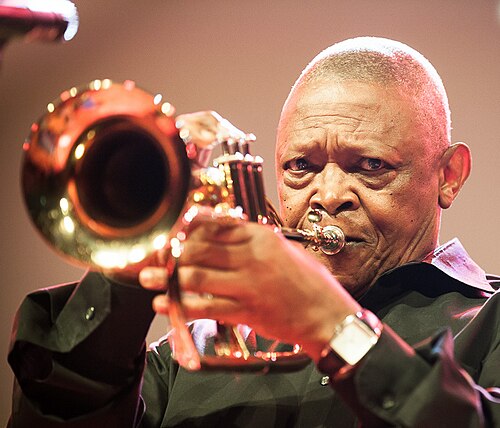
Hugh Ramapolo Masekela was born on 4 April 1939 in South Africa, where he would become known as "the father of South African jazz." He played trumpet, flugelhorn, and cornet, building a career that fused jazz composition with pointed political work. In 1968, right in the middle of apartheid's grip, he released "Grazing in the Grass" - an instrumental that climbed to number one on the US pop charts and was later covered by other artists. But his lasting mark came from songs like "Soweto Blues" and "Bring Him Back Home," which became anthems of the anti-apartheid movement. He died on 23 January 2018, having spent decades proving that a brass instrument could carry both melody and resistance.




Fame.am measures public visibility signals. It does not measure human value, talent, morality, or credibility.