Hammurabi
Sixth king of Babylon (r. 1792-1750 BCE) · Historical Figures · Lived 1810 BC to 1750 BC · aged 60
Hammurabi is read about 1,856 times a day, in 113 languages.
A typical day, 30 days to 23 October 2026
The middle day of the days counted, so one week of news cannot move it. The line under it is the last 398 days, one point a day.
Something wrong?He conquered Mesopotamia in the 18th century BC, but what keeps his name in circulation is the law code - one of the first to flip the script from compensating victims to punishing perpetrators, and to bake in presumption of innocence.
Also in Deutsch
Photos 8
 F0182 Louvre Code Hammourabi Bas-relief Sb8 rwk
 (Mesopotamia) Hammurabi
 Babel and Bible; (1906) (14579765298)
 Babylone 1
 Babylonian tablet of Hammurabi
 Briefe König Hammurapis (2123-2081 v. Chr.), nebst sinem einleitenden Überblick über die Geschichte und Kultur seiner Zeit und einem Anhang, Briefe anderer altbabylonischer Herrscher (1919) (14576489278)
 Civilization 1 leaders
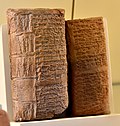
 Clay cone Sippar Louvre AO3277
In their own words 3
 ,
Anu and Bel called by name me, Hammurabi, the exalted prince, who feared God, to bring about the rule of righteousness in the land.
If a man put out the eye of another man, his eye shall be put out.
Laws of justice which Hammurabi, the wise king, established.
Family

Is this everyone?
Only relatives with a profile here are drawn, so a family can be larger than this. A line here can also be wrong.
Correct this familyAbout this person
Hammurabi took the throne of Babylon around 1792 BC after his father abdicated, then spent his reign swallowing city-states: Larsa, Eshnunna, Mari. He broke Assyria's king and forced his son into tribute, pulling nearly all of Mesopotamia under Babylonian control. The law code he issued - framed as a revelation from Shamash, god of justice - prescribed specific penalties for each crime and capped what victims could claim in retribution, a break from earlier Sumerian codes. He was worshipped as a god while alive, celebrated after death as the conqueror who spread civilization and made the world bow to Marduk. His military wins faded from memory, but the lawgiver stuck: later kings claimed him as ancestor, and even after his empire crumbled, Mesopotamians used his reign as the zero-point for dating the past. Archaeologists pulled him back into view in the late 19th century, and he's been lodged in the history of law ever since.
Fame.am measures public visibility signals. It does not measure human value, talent, morality, or credibility.