His ghazals - love poems that double as mystical ecstasy, wine as divine intoxication - have sat in Iranian homes for six centuries, memorized like scripture and quoted like proverbs. Persians still crack open his Divân for divination, treating the 14th-century Sufi's verses as an oracle.
Also in Deutsch
Photos 8
.jpg?width=1200) Anselm Feuerbach Hafis vor der Schenke (cropped)
Anselm Feuerbach Hafis vor der Schenke (cropped) Bogorodica Ljeviška - verse by poet Hafiz
 Chama al-Din Muhammad Hafiz
 Depiction of Hafiz, painted by Sultan Muhammad circa 1531, Cartier Hafiz
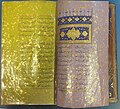
 Divan hafiz
 Diwan des Grossen Lyrischen Dichters Hafis 1858 Vol.1 Page 001
 Anselm Feuerbach Hafis vor der Schenke
.jpg?width=1200) Anselm Feuerbach - Hafis am Brunnen (1866)
Anselm Feuerbach - Hafis am Brunnen (1866)About this person
Khajeh Shams-od-Din Mohammad Hafez Shirazi was born in Shiraz in 1325 and wrote under the pen name Hafez, later earning the sobriquet Lisan al-Ghayb - Tongue of the Unseen. He worked primarily in ghazals, the lyric form best suited to Sufi mysticism, weaving together the beloved, faith, and the exposure of hypocrisy; his taverns and wine were religious ecstasy dressed in worldly language, freedom from restraint voiced through the lover. The Divân, his collected works likely compiled after his death in 1390, shaped post-14th century Persian writing more than any other author. His tomb in Shiraz draws steady pilgrimage, and his lines surface everywhere - in traditional music, calligraphy, visual art, and translations into every major language.
Writers born in the 1320s 6



Fame.am measures public visibility signals. It does not measure human value, talent, morality, or credibility.