Greta Garbo is read about 3,176 times a day, in 97 languages.
A typical day, 30 days to 15 October 2026
The middle day of the days counted, so one week of news cannot move it. The line under it is the last 390 days, one point a day.
Something wrong?She walked off the screen in 1941 and never came back. For fifty years after, Garbo refused every offer, every interview, every chance to explain why Hollywood's most magnetic face had simply chosen silence.
A life in dates
 The South Bank ShowSeries1976
 That's Entertainment, Part IIFilm, (archive footage)1974
 Spécial cinémaSeries1955“I never said, "I want to be alone." I only said, "I want to be let alone! There is all the difference.”In their words24 January 1955Quoted in John Bainbridge, Garbo (Doubleday, 1955) and "To Be Herself", Life (January 24, 1955; Vol. 38, No. 4), p. 113; as the Russian
 MGM ParadeSeries, 19551954Academy Honorary AwardAward1941
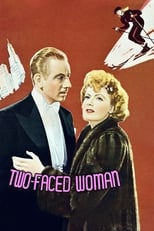 Two-Faced WomanFilm, Karin Borg Blake1937Litteris et ArtibusAward
 ConquestFilm, 1937Countess Marie Walewska1935
 Anna KareninaFilm, Anna Karenina1932
 As You Desire MeFilm, Zara, a.k.a. Maria1930
 Anna ChristieFilm, Anna Christie1928“I am bewildered by the thousands of strange people who write me letters. They do not know me. Why do they do that?”In their wordsScreen Secrets: Greta Garbo Breaks her Silence (1928)
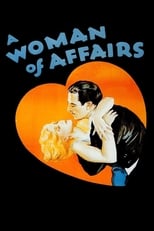 A Woman of AffairsFilm, 1928Diana Merrick1926
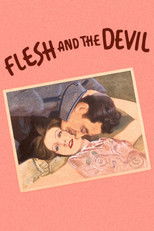 Flesh and the DevilFilm, Felicitas1924
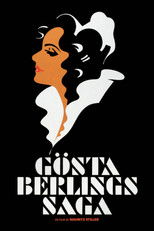 The Saga of Gösta BerlingFilm, Elizabeth Dohna1905Born18 September 1905
Also in Deutsch
Photos 1

In their own words 2
 ,
I never said, "I want to be alone." I only said, "I want to be let alone! There is all the difference.
I am bewildered by the thousands of strange people who write me letters. They do not know me. Why do they do that?
Listen
SpotifyFilmography 40
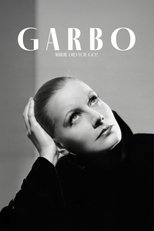 GGGarbo: Where Did You Go?
 PQPrejudice and Pride: Swedish Film Queer
 SHScotty and the Secret History of Hollywood
 MMMy Scientology Movie
 FGFinal Cut: Ladies and Gentlemen
 VIVito
 HY1939: Hollywood's Greatest Year
 THThou Shalt Not: Sex, Sin and Censorship in Pre-Code Hollywood
 CWComplicated Women
 TMThe First 100 Years: A Celebration of American MoviesTIThat's Entertainment, Part II
 MAMarlowe
 TEThe Happy EndingTWTwo-Faced Woman
 ASA New Romance of Celluloid: The Miracle of Sound
 NINinotchkaCOConquest
 CACamilleAKAnna Karenina
 QCQueen Christina
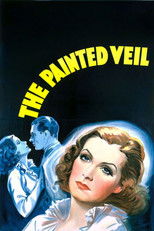 TVThe Painted Veil
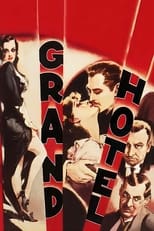 GHGrand HotelAMAs You Desire Me
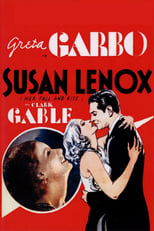 SLSusan Lenox
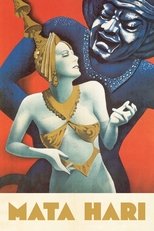 MHMata Hari
 INInspirationACAnna Christie
 RORomance
 ACAnna Christie
 TKThe Kiss
 WOWild Orchids
 TLThe Mysterious LadyAAA Woman of Affairs
 TWThe Divine Woman
 LOLoveFDFlesh and the Devil
 TTThe Temptress
 TOTorrent
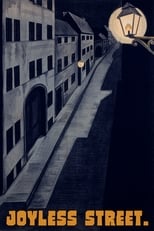 JSJoyless StreetTBThe Saga of Gösta Berling
90 credits on file
Television 4
 SY1939: Secrets of Hollywood's Golden YearTSThe South Bank ShowSCSpécial cinémaMPMGM Parade
Awards
Family
Parents
Greta GarboBrothers and sisters
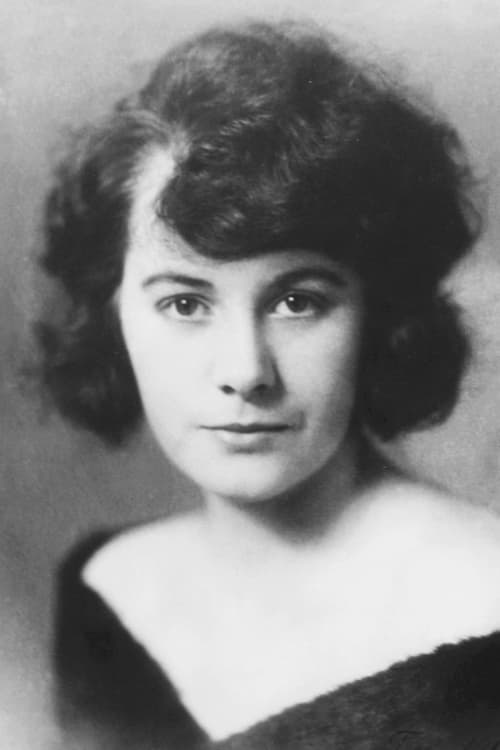
Is this everyone?
Only relatives with a profile here are drawn, so a family can be larger than this. A line here can also be wrong.
Correct this familyAbout this person
Born Greta Lovisa Gustafsson in Sweden, she broke through in the 1924 film The Saga of Gösta Berling, catching the eye of MGM's Louis B. Mayer, who brought her to Hollywood in 1925. Her third American film, Flesh and the Devil (1926), made her an international star, and by 1928's A Woman of Affairs she was MGM's top draw, eclipsing Lillian Gish. The 1930 transition to sound - marketed with "Garbo talks!" - brought an Oscar nomination for Anna Christie, and her reign continued through Grand Hotel, Queen Christina, and what many consider her finest work, Camille (1936). Labeled box office poison in 1938, she rebounded with the comedy Ninotchka (1939), but Two-Faced Woman flopped in 1941 and she walked away for good at thirty-six. Four years before her death in 1990, she finally said it plain: "I was tired of Hollywood. I did not like my work."
In common with Greta



Fame.am measures public visibility signals. It does not measure human value, talent, morality, or credibility.