Gregory the Illuminator
Patron saint of the Armenian Apostolic Church (c.257-c.331) · Religious Figures · Lived 252 to 329 · aged 77
Gregory the Illuminator is read about 353 times a day, in 46 languages.
A typical day, 30 days to 16 September 2026
The middle day of the days counted, so one week of news cannot move it. The line under it is the last 60 days, one point a day.
Something wrong?He turned an entire kingdom Christian after surviving 14 years at the bottom of a pit - punishment for refusing to honor a pagan goddess. The man who threw him in became his first convert, and Armenia became the first state to make Christianity official.
Also in Deutsch
Photos 2


Family

 Gregory the Illuminator
Partners
Children
Is this everyone?
Only relatives with a profile here are drawn, so a family can be larger than this. A line here can also be wrong.
Correct this familyAbout this person
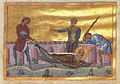
Gregory was born around 257, the son of Anak, a Parthian nobleman who assassinated Armenia's King Khosrov II. While Anak's family was wiped out in retribution, the boy was smuggled to safety and raised Christian in Caesarea of Cappadocia. He returned to Armenia as an adult and entered the service of King Tiridates III - the dead king's son. When Gregory refused to sacrifice to a pagan goddess, Tiridates had him tortured; when the king learned who Gregory's father was, he had him thrown into a deep pit called Khor Virap and left for dead. Fourteen years later, with the king's sister interceding, Gregory was pulled out alive. He converted Tiridates, healed him of what the sources call madness brought on by sin, and in 301 baptized the king and the Armenian people - making Armenia the first state to adopt Christianity. Consecrated bishop, Gregory traveled the country destroying pagan temples and raising churches. He eventually withdrew to live as a hermit, passing the patriarchate to his son Aristaces.
Religious Figures born in the 250s 6




Fame.am measures public visibility signals. It does not measure human value, talent, morality, or credibility.