Giovanni Pastrone
Italian film pioneer, director, screenwriter, actor and technician (1883-1959) · Italy · On the map · Directors · Died at 75
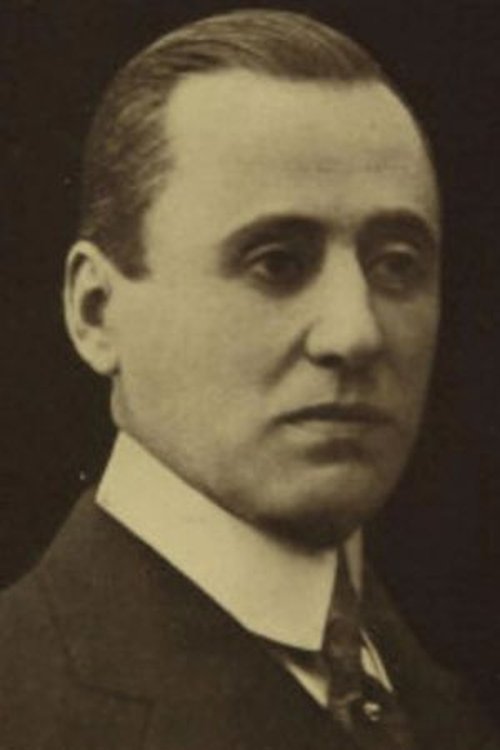
Giovanni Pastrone, also known by his artistic name Piero Fosco, was an Italian film pioneer, director, screenwriter, actor and technician.
Giovanni Pastrone is read about 48 times a day, in 24 languages.
A typical day, 30 days to 18 September 2026
The middle day of the days counted, so one week of news cannot move it. The line under it is the last 60 days, one point a day.
Something wrong?A life in dates
 La Moglie di ClaudioFilm, Director
 Maciste atletaFilm, 1918Director1917The Light, Triptych of Modern LifeFilm, Writer1916
 The FireFilm, Director, Writer1915
 MacisteFilm, Writer1914
 CabiriaFilm, Director, Writer1913
 Stronger than Sherlock HolmesFilm, Director1912At the Cinema ShowFilm, Director1911
 The Fall of TroyFilm, Director, Writer1910Agnese ViscontiFilm, Director1909Enrico IIIFilm, Director
 Julius CaesarFilm, 1909Director1883Born13 September 1883
People around Giovanni
Close ties

 Bartolomeo Pagano Giovanni directed The Warrior (1916)
 Pina Menichelli Giovanni directed The Fire and Tigre reale
 Febo Mari Giovanni directed The Fire and Tigre reale
- Felice Minotti Giovanni directed The Fire and The Warrior
 Italia Almirante Manzini Giovanni directed Hedda Gabler (1920)
 Vittorio Rossi Pianelli Giovanni directed Hedda Gabler (1920)
 Gabriele D'Annunzio Also in Cabiria and The Fire
 Domenico Gambino Giovanni directed Stronger than Sherlock Holmes (1913)
 Emilio Ghione Giovanni directed Agnese Visconti (1910)
 Gero Zambuto Also in La Moglie di Claudio and Hedda Gabler
 Letizia Quaranta Giovanni directed Hedda Gabler (1920)
 Oreste Bilancia Giovanni directed Hedda Gabler (1920)
 Victor Vina Giovanni directed The Fall of Troy (1911)
Filmography 17
26 credits on file
Media & music
Photos 2


About this person
He worked during the era of the silent film and influenced many important directors in the international cinema with Cabiria, such as David Wark Griffith in The Birth of a Nation (1915) and Intolerance (1916). Martin Scorsese believes that Pastrone's work in Cabiria can be considered as the invention of the epic movie and he deserves credit for many of the innovations often attributed to D.W. Griffith and Cecil B. DeMille. Among those was the extensive use of a moving camera, thus freeing the feature-length narrative film from "static gaze".

