fme.am
Top 100Trending
ListsCompare
CreateClaim profile
Fame.am

The global fame profile, ranking, and monitoring platform for people online.

Explore
  • Top 100
  • Trending
  • Rising
  • Lists
  • New profiles
  • Historical
  • Search
Browse
  • Countries
  • Categories
  • Tags
  • Compare
Profile
  • Create profile
  • Claim profile
  • My dashboard
Trust
  • About
  • Data sources
  • Report / Correct
  • Opt out
  • Privacy
  • Terms
  • Contact

Fame.am measures public visibility signals. It does not measure human value, talent, morality, or credibility.

v1 · public beta

© 2026 Fame.am

GS
Source-basedStable

Gidō Shūshin

Japanese monk and writer

  • Fame43.5
  • Momentum3.4
  • Wikipedia414
Lived 1325–1388, aged 63Japan
Japan flagJapanWritersWriter / Author
  • Wikipedia
    7 languages
    Cross-language footprint
  • Era
    1325–1388
    Aged 63
Summary
Updated 2026-07-03

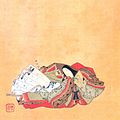
Gidō Shūshin ; 1325–1388), Japanese luminary of the Zen Rinzai sect, was a master of poetry and prose in Chinese. Gidō's own diary relates how as a child he discovered and treasured the Zen classic Rinzairoku in his father's library. He was born in Tosa on the island of Shikoku and began formal study of Confucian and Buddhist literature. His religious proclivities were encouraged when he witnessed the violent death of a clan member. Like many others he took his first vows on Mt. Hiei near the capital. Gidō's life was changed with a visit to the prominent Zen master Musō Soseki (1275–1351) in 1341. He would become the master's attendant after his own unsuccessful pilgrimage to China. He would become a principal disciple. Gidō was born with eyesight difficulties. His choice of a literary name was Kūgedojin or Holy Man who sees Flowers in the Sky. Kūge was from Sanscrit khpuspa and indicated illusory sense perceptions. Gidō would play a role of conciliator between rival courts in the nation's civil war. His loyalty was with the northern court and its Ashikaga supporters. After taking residence in the city of Kamakura, Gidō would become the personal advisor to the Ashikaga rulers there. Gidō encouraged Confucian political values such as centralized rule and social stability. Likewise Gidō became an advocate of Sung period Chinese Neo-Confucian humanistic values, both political and literary. In 1380 Gidō was asked by the reigning shōgun, Yoshimitsu (1358–1408), to reside with him in Kyoto. Gidō's last years were spent personally instructing Yoshimitsu in Confucian and Buddhist subjects.

Key facts
Profile type
Writer / Author
Category
Writers
Country
Japan
Last updated
2026-07-03
Where to find them

Platforms

No platforms connected yet.

By the numbers

Score breakdown

The six component signals behind the Fame score, and their ranks across the leaderboards.

Fame
Stable
43.5
Composite of search demand, mentions, audience & graph footprint.
Score components
Momentum3.4
Historical6.7
Source confidence40.0
Completeness55.0
Global rank
—
Country rank
—
Category rank
—
Receipts

Sources

  • 义堂周信
    wikipedia · zh.wikipedia.org
    Low confidence
  • Gidō Shūshin
    wikipedia · de.wikipedia.org
    Low confidence
  • Gidō Shūshin
    wikipedia · en.wikipedia.org
    Low confidence
Identity

Quick facts

Country
Japan
Category
Writers
Profile type
Writer / Author
Status
deceased
Born
March 1, 1325
Died
May 10, 1388
Wikipedia
View article
Last updated
1mo ago
Keep exploring

Where Gidō stands

  • Explore Writers→
  • Explore Japan→
  • Who’s rising in Writers→
Compare Gidō with…
Momentum

Trend & search interest

Fame score · last 90 days
Alerts

Watch this profile

Get notified when Gidō Shūshin's rank changes.
Share

Share this profile

GS
Gidō Shūshin
Writers
fame.am
43.5
Generate a polished share card or copy a link with a rich preview.
Trust

Make this profile better

  • Request correction
  • Request removal
  • Wrong person?
Discover

You might know

Similar profiles worth watching

Pope Francis
Also in WritersPope Francis
Martin Luther King Jr.
Also in WritersMartin Luther King Jr.
Miguel de Cervantes
Also in WritersMiguel de Cervantes
Hans Christian Andersen
Also in WritersHans Christian Andersen
William Shakespeare
Also in WritersWilliam Shakespeare
Edgar Allan Poe
Also in WritersEdgar Allan Poe