Gentile da Foligno
Italian physician · Doctors · Lived 1280 to 1348 · aged 68
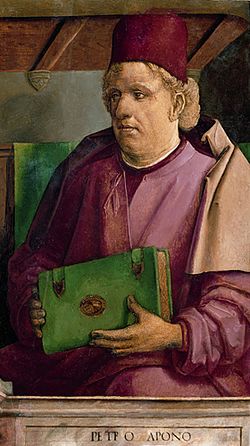
Gentile Gentili da Foligno was an Italian professor and doctor of medicine, trained at Padua and the University of Bologna, and teaching probably first at Bologna, then at the University of Perugia, Siena (1322-1324), where his annual stipend was 60 gold florins; he was called to Padua (1325-1335) by Ubertino I da...
Gentile da Foligno is read about 6.5 times a day, in 5 languages.
A typical day, 30 days to 20 June 2026
The middle day of the days counted, so one week of news cannot move it. The line under it is the last 60 days, one point a day.
Something wrong?People around Gentile
Close ties


Also in Deutsch
Media & music

About this person
Gentile Gentili da Foligno was an Italian professor and doctor of medicine, trained at Padua and the University of Bologna, and teaching probably first at Bologna, then at the University of Perugia, Siena (1322-1324), where his annual stipend was 60 gold florins; he was called to Padua (1325-1335) by Ubertino I da Carrara, Lord of Padua, then returned to Perugia for the remainder of his career. He was among the first European physicians to perform a dissection on a human being (1341), a practice that had long been taboo in Roman times. Gentile wrote several widely copied and read texts and commentaries, notably his massive commentary covering all five books of the Canon of Medicine by the 11th-century Persian polymath Avicenna, the comprehensive encyclopedia that, in Latin translation, was fundamental to medieval medicine. Long after his death, Gentile da Foligno was remembered in the Nuremberg Chronicle (1493) as Subtilissimus rimator verborum Avicenne, "that most subtle investigator of Avicenna's teachings"


