
Fukuzawa Yukichi
✓ Source-basedrisingModern Enlightenment thinker, educator, philosopher, scholar, author, writer, journalist, translator, entrepreneur, and founder of Keio University in Japan's Meiji era (1835-1901)
He taught a feudal society to read the West, then taught it to leave Asia behind. Fukuzawa Yukichi translated more than words - he translated entire systems of thought, arguing that Japan's survival demanded it adopt not just Western rifles but Western institutions, and that heaven had created no man above another.
Text from Wikipedia, CC BY-SA 4.0
Also inDeutsch
Photos 11

 Fukuzawa's childhood home in Nakatsu, Ōita Prefecture
 Fukuzawa in 1862
 Sailors of the Kanrin Maru, members of the Japanese Embassy to the United States in 1860. Fukuzawa is seated on the far-right.
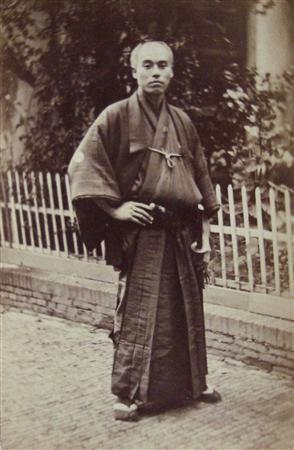 Fukuzawa posing in Utrecht as part of the First Japanese Embassy to Europe in 1862

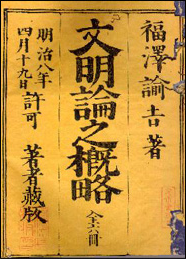 Cover page of Bunmeiron no Gairyaku (An Outline of a Theory of Civilization, 1875)
In their orbit 5
Educators from Japan 6


About this person
Born into a low-ranking samurai family on 10 January 1835, Fukuzawa grew contemptuous of Tokugawa Japan's rigid class order. He studied Dutch, then English, and became an official translator for the shogunate, traveling with Japan's first missions to the United States in 1860 and Europe in 1862. What he saw convinced him that technology alone wouldn't save the country - it needed Western social, economic, and political structures too. After the Meiji Restoration of 1868, he refused all government posts and stayed independent, founding Keio Gijuku and the newspaper Jiji Shinpō. His bestselling works Seiyō Jijō and Gakumon no Susume explained the West and pressed for change; in the latter he wrote that heaven created no man above another, that education determined standing. But his idealism curdled into something harder - by 1885 his "Datsu-A Ron" editorial urged Japan to abandon its "hopelessly backward" Asian neighbors and align with the civilized West, and he backed the war with China. He died 3 February 1901, his face later placed on the 10,000 yen note for four decades.
Text from Wikipedia, CC BY-SA 4.0
 Japan
JapanFame.am measures public visibility signals. It does not measure human value, talent, morality, or credibility.