Frederick the Great
King of Prussia from 1740 to 1786 (1712-1786) · Germany · Historical Figures · Died at 74
Frederick the Great is read about 4,620 times a day, in 95 languages.
A typical day, 30 days to 15 October 2026
The middle day of the days counted, so one week of news cannot move it. The line under it is the last 390 days, one point a day.
Something wrong?The philosopher-king who hated his father's militarism, then spent forty-six years at war. Frederick turned Prussia from a second-tier German state into the power that would eventually unify Germany, and died so beloved his soldiers called him "Old Fritz."
A life in dates
Also in Deutsch
Photos 8
 Friedrich Zweite Alt
 297 of 'Die Hohenzollern und das Reich, etc' (11167783114)
 421 of 'Britain and her Rivals in the eighteenth century, 1713-1789' (11232902393)
 Abraham, Jacob- Huldigung an Friedrich II. zu Marienburg - Münzkabinett, Berlin - 5525985
 Anna Leopoldovna Frederick II
 Aus Deutschlands Werdegang, 1813-1815 der Befreiungskrieg 1913 (32150329)
 Breslau und Umgebung 113
 Bruno Frank, 015
In their own words 10
 ,
It is disgusting to notice the increase in the quantity of coffee used by my subjects, and the amount of money that goes out of the country as a consequence.
But a prince, when he binds himself, does not bind himself alone, otherwise he would be in the same position as a private individual.
Truth to tell, treaties are only oaths of deception and faithlessness. The jurisprudence of sovereigns is customarily the law of the strongest.
Awards
Family
Parents
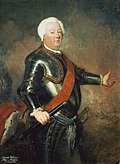
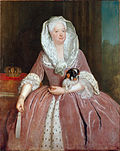 Frederick the Great
Partners

Brothers and sisters
 Sophia Dorothea of Prussia
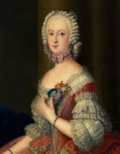 Princess Philippine Charlotte of Prussia
 Louisa Ulrika of Prussia
 Wilhelmine of Prussia, Margravine of Brandenburg-Bayreuth
 Anna Amalia of Prussia, Abbess of Quedlinburg
 Princess Friederike Luise of Prussia
 Prince Augustus Ferdinand of Prussia
 Prince Heinrich of Prussia
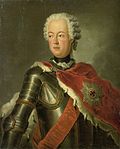 Prince Augustus William of Prussia
 Frederick Louis, Crown Prince of Prussia
- Friedrich Wilhelm Prinz von Preußen
- Charlotte Albertine Prinzessin von Preußen
- Ludwig Karl Wilhelm Prinz von Preußen
Is this everyone?
Only relatives with a profile here are drawn, so a family can be larger than this. A line here can also be wrong.
Correct this familyAbout this person
Born in 1712, Frederick II clashed with his authoritarian father over his love of music and philosophy. Upon taking the throne in 1740, he immediately invaded Silesia and seized it from Austria, revealing a military genius no one had expected. He spent the next decades reorganizing the Prussian army, writing influential military theory drawn from his own battlefield experience, and expanding his kingdom through the First Partition of Poland in 1772. At home he practiced enlightened absolutism - modernizing the bureaucracy, reforming the courts, allowing religious freedom for Protestants, Catholics, and Jews, and patronizing Enlightenment thinkers and the arts. Almost certainly homosexual, he died childless in 1786 at Sanssouci, his favourite palace. Nineteenth-century German historians made him a national icon; the Nazis later claimed him as a precursor to Hitler, which darkened his reputation after 1945.


Fame.am measures public visibility signals. It does not measure human value, talent, morality, or credibility.