
Frederick Haines
✓ Source-basedstableBritish field marshal (1819-1909)
Field Marshal Sir Frederick Paul Haines, was a British Army officer. He fought in the First Anglo-Sikh War, in the Second Anglo-Sikh War and then in the Crimean War: during the latter conflict at the Battle of Inkerman, he held an important barrier on the post road guarding the approach to the 2nd Division camp for...
Text from Wikipedia, CC BY-SA 4.0
Also inDeutsch
Photos 4



Awards 3
Connected to Frederick 6
 Genova Thaon di RevelAlso won 5th class, Order of the Medjidie
 Sourindro Mohun TagoreAlso won Companion of the Order of the Indian Empire
 Binay Ranjan SenAlso won Companion of the Order of the Indian Empire
 Lajos TüköryAlso won 5th class, Order of the Medjidie
 Józefa RostkowskaAlso won 5th class, Order of the Medjidie
 Ashley EdenAlso won Companion of the Order of the Indian Empire
About this person
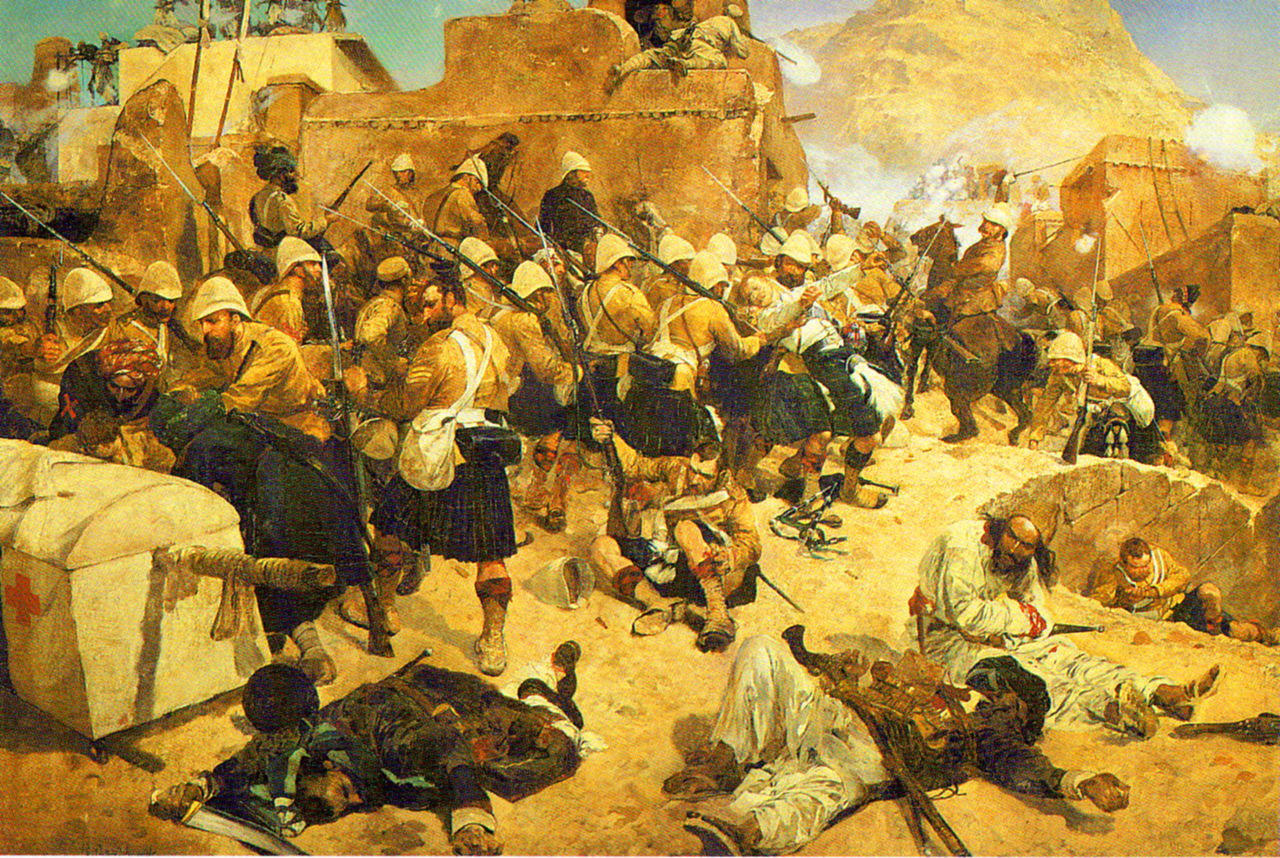
Field Marshal Sir Frederick Paul Haines, was a British Army officer. He fought in the First Anglo-Sikh War, in the Second Anglo-Sikh War and then in the Crimean War: during the latter conflict at the Battle of Inkerman, he held an important barrier on the post road guarding the approach to the 2nd Division camp for six hours. He served in India during the Indian Rebellion before becoming Commanding Officer of the 8th Regiment of Foot in the United Kingdom and then Commander of a Brigade in Ireland. He went on to be General Officer Commanding the Mysore Division of the Madras Army and then Quartermaster-General to the Forces in the United Kingdom. He returned to India to become Commander-in-Chief of the Madras Army in May 1871 and then Commander-in-Chief, India in April 1876: he commanded the forces in India during the Second Anglo-Afghan War and successfully argued for a large force being made available before mobilisation occurred, but once the war started the Governor-General of India, Lord Lytton, was inclined to by-pass Haines and deal direct with commanders in the field, causing friction between the two men.
Text from Wikipedia, CC BY-SA 4.0
Fame.am measures public visibility signals. It does not measure human value, talent, morality, or credibility.