
Elizabeth Williams Champney
✓ Source-basedfallingAmerican writer (1850-1922)
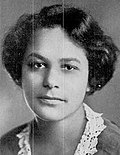
Elizabeth Williams Champney was an American author of novels and juvenile literature, as well as travel writing, most of which featured foreign locations. Champney's observations and experiences during her European travels were published in Harper's Magazine, and also in The Century Magazine.
Also inDeutsch
Photos 3


In their orbit 1

Writers from United States 6


About this person
Elizabeth Williams Champney was an American author of novels and juvenile literature, as well as travel writing, most of which featured foreign locations. Champney's observations and experiences during her European travels were published in Harper's Magazine, and also in The Century Magazine. She published eighty or more articles in Harper's and Century, including a series on Portugal, and papers entitled "A Neglected Corner of Europe", and "In the Footsteps of Futuney and Regnault". After her return to the United States, Champney wrote fifteen books; novels, stories for juveniles, and historical works under cover of stories, mostly adapted to young people. Her novels were originally directed mainly at young girls, including the Witch Winnie series and the Vassar Girls Abroad series, but she later wrote romantic semi-fictional fables of castles, such as The Romance of the Feudal Chäteaux (1899). The novels included, Bourbon Lilies, and Romany and Rue. Of the juveniles, All Around a Palette, and Howling Wolf and His Trick Pony were the most popular. The historical series included Great Grandmother Girls in New France and in Mexico. Her husband, James Wells Champney, was an artist. Their summer home was in Deerfield, Massachusetts, while the winter residence was in New York.
 United States
Fame.am measures public visibility signals. It does not measure human value, talent, morality, or credibility.