Edward Said
Palestinian-American professor (1935-2003) · United States · Academics · Died at 67
Edward Said is read about 1,496 times a day, in 76 languages.
A typical day, 30 days to 15 October 2026
The middle day of the days counted, so one week of news cannot move it. The line under it is the last 390 days, one point a day.
Something wrong?The critic who rewrote how the West sees the East. Orientalism, his 1978 book, argued that centuries of Western scholarship and art didn't just describe the Middle East and Asia - they invented them, turning living societies into exotic fantasies that justified empire.
A life in dates
Also in Deutsch
Photos 9

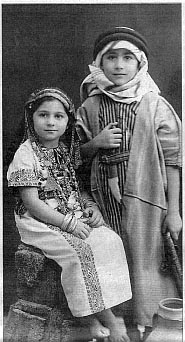 Edward Said and his sister, Rosemarie Said, dressed in traditional Arab clothing, 1940
 The 19th-century novelist Joseph Conrad is the subject of Said's first book, Joseph Conrad and the Fiction of Autobiography (1966).
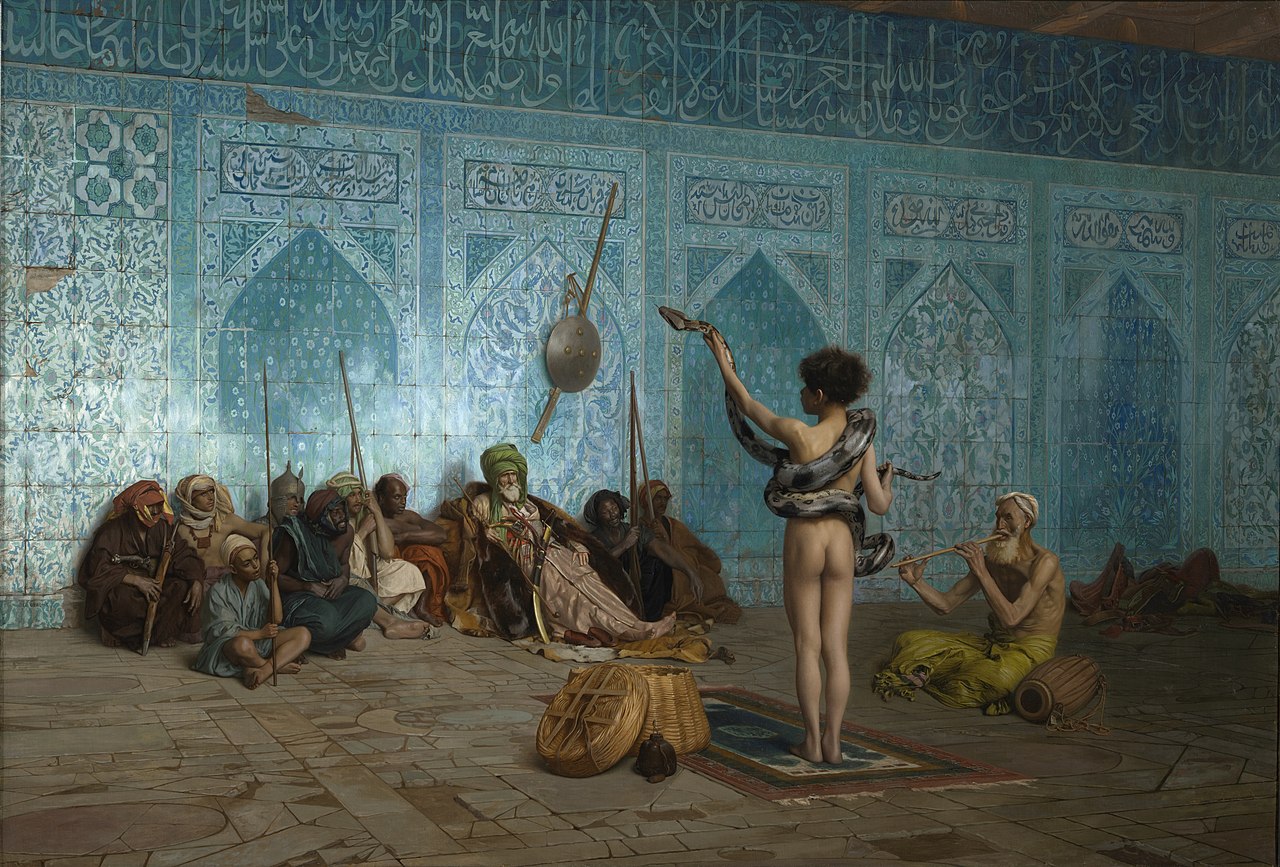 The cover of the book Orientalism (1978) is a detail from the 19th-century Orientalist painting The Snake Charmer, by Jean-Léon Gérôme (1824-1904).
 The Motherland and her dependent colonies are the subjects of post-colonial studies (William-Adolphe Bouguereau, 1883).
 The administrative domains of the Palestinian Authority (red)
![For throwing a stone at an Israeli guardhouse across the Blue Line Lebanese-Israeli border, Commentary magazine labelled Said "The Professor of Terror" in 2000.[77]](https://upload.wikimedia.org/wikipedia/commons/thumb/1/10/BlueLine.jpg/1280px-BlueLine.jpg) For throwing a stone at an Israeli guardhouse across the Blue Line Lebanese-Israeli border, Commentary magazine labelled Said "The Professor of Terror" in 2000.[77]
For throwing a stone at an Israeli guardhouse across the Blue Line Lebanese-Israeli border, Commentary magazine labelled Said "The Professor of Terror" in 2000.[77]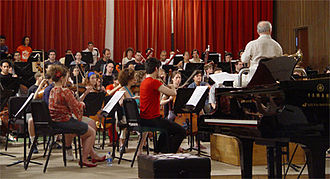 The harmonious Middle East: the West-Eastern Divan Orchestra conducted by Daniel Barenboim
In their own words 10
 ,
, I’ve always been interested in what gets left out.
The central fact for me is, I think, that the [role of the] intellectual ...
The history of other cultures is non-existent until it erupts in confrontation with the United States.
Awards
Family
Edward SaidPartners

Children
Brothers and sisters

Is this everyone?
Only relatives with a profile here are drawn, so a family can be larger than this. A line here can also be wrong.
Correct this familyAbout this person
Born in Jerusalem in 1935, Said was a U.S. citizen through his father's military service, but the 1948 war sent the family to Egypt and eventually America. He moved through Victoria College in Cairo and prep school in Massachusetts before Princeton and a Harvard doctorate in English literature. At Columbia from 1963 until his death, he became a founder of post-colonial studies, drawing on Gramsci, Fanon, and Foucault to build a model of textual analysis that changed how scholars read power and culture. He joined the Palestinian National Council and pushed for a two-state solution with the right of return, then quit in 1993 over the Oslo Accords; by 1999 he'd shifted to arguing only one binational state could hold. He lectured at more than 200 universities and defined his work as the intellectual's duty: to sift, judge, criticize, so that choice returns to the individual. He died in September 2003.
In common with Edward


Academics from the United States 3


Fame.am measures public visibility signals. It does not measure human value, talent, morality, or credibility.