Chester W. Nimitz
United States Navy fleet admiral (1885-1966) · United States · Historical Figures · Died at 80
Chester W. Nimitz is read about 1,838 times a day, in 60 languages.
A typical day, 30 days to 15 October 2026
The middle day of the days counted, so one week of news cannot move it. The line under it is the last 390 days, one point a day.
Something wrong?He commanded the entire Pacific theatre for the United States in World War II - every ship, every plane, every beachhead from Pearl Harbor to Tokyo Bay.
A life in dates
Also in Deutsch
Photos 8
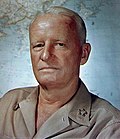
 Chester Nimitz-fleet-admiral
 "Get'em out for your Navy" - NARA - 514357
 "Holland Smith's 61st Birthday, -at- Pearl Harbor with Chester Nimitz, 1943" (48233214096)
 "I urge all Navy personnel to 'Save Today for Tomorrow'" - NARA - 514565
 Photograph evidently taken from top of Washington Monument, of crowd assembled below for ceremonies honoring Admiral... - NARA - 199207
 208-PU-70A-5 (25519789483)
 208-PU-70A-6 (26096490126)
 66-50-D Medal, Badge, Italy, Knight Grand Cross of the Military Order of Italy
In their own words 10
 ,
Is the proposed operation likely to succeed? What might be the consequences of failure? Is it in the realm of practicability in terms of matériel and supplies?
Through the skill and devotion to duty of their armed forces of all branches in the Midway area our citizens can now rejoice that a momentous victory is in the making.
Well, you were only five miles, five degrees, and five minutes off.
Awards
In their orbit
About this person
Chester William Nimitz was born 24 February 1885 and became the Navy's leading authority on submarines, qualifying early and later driving the shift from gasoline to diesel propulsion. Beginning in 1917, he developed underway replenishment techniques that would let fleets operate indefinitely without returning to port - the system that made Pacific island-hopping possible. He served as chief of the Bureau of Navigation from 1939 to 1942, then took command as Commander in Chief of the US Pacific Fleet and Pacific Ocean Areas, directing all Allied air, land, and sea forces through the war. After victory he became chief of naval operations from 1945 to 1947, and later secured approval for the world's first nuclear-powered submarine, USS Nautilus, which made diesel boats obsolete. He died 20 February 1966, the last surviving US fleet admiral.
Historical Figures from the United States 6



Fame.am measures public visibility signals. It does not measure human value, talent, morality, or credibility.