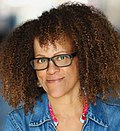
Bernardine Evaristo
✓ Source-basedstableBritish author and academic (1959-)
Bernardine Anne Mobolaji Evaristo is an English author and Professor of Creative Writing at Brunel University of London. She is Visiting Professor of Creative Media 2025/6 at the University of Oxford.
Text from Wikipedia, CC BY-SA 4.0
Also inDeutsch
Photos 2


In their own words 5
I wanted to put presence into absence. I was very frustrated that black British women weren't visible in literature.
On her novel Girl, Woman, Other in "Bernardine Evaristo: 'I want to put presence into absence'", The Guardian (27 April 2019).
With all of my books I'm interested in where people come from in relation to who they are.
On her writing interests in "Bernardine Evaristo: 'I want to put presence into absence'", The Guardian (27 April 2019).
I have a term I came up with called fusion fiction - that's what it felt like, with the absence of full stops, the long sentences.
On what she calls her writing style in "Bernardine Evaristo: 'I want to put presence into absence'", The Guardian (27 April 2019).
Awards 7
Connected to Bernardine 6
 Prince Philip, Duke of EdinburghAlso won Freedom of the Royal Borough of Greenwich
 Verner PantonAlso won Fellow of the Royal Society of Arts
 Ben OkriAlso won Booker Prize
 Bernice RubensAlso won Booker Prize
 Teresa Ann SavoyAlso won Fellow of the Royal Society of Arts
 Lavie TidharAlso won Jerwood Fiction Uncovered Prize
About this person
Bernardine Anne Mobolaji Evaristo is an English author and Professor of Creative Writing at Brunel University of London. She is Visiting Professor of Creative Media 2025/6 at the University of Oxford. Her novel Girl, Woman, Other jointly won the Booker Prize in 2019 alongside Margaret Atwood's The Testaments, making her the first black woman to win the Booker. The novel won many other awards including two British Book awards. In 2025, Evaristo was selected from among all previous Women's Prize for Fiction winners and nominees as the recipient of the Women's Prize Outstanding Contribution Award, a one-off literary honour to celebrate the 30th anniversary of the Women's Prize for Fiction. She served for four years as President of the Royal Society of Literature, the second woman and the first Black or Asian person to hold the role since it was founded in 1820. She was elected President Emerita once her tenure was completed in 2025.
Text from Wikipedia, CC BY-SA 4.0
 United Kingdom
Fame.am measures public visibility signals. It does not measure human value, talent, morality, or credibility.