Anna Akhmatova
Russian poet (1889-1966) · Russia · On the map · Writers · Died at 76
She stayed. Through the executions, the terror, the decades when her words were banned - Anna Akhmatova refused exile and wrote witness to Stalinism from inside it, becoming the voice that said what couldn't be said.
Anna Akhmatova is read about 1,416 times a day, in 103 languages.
A typical day, 30 days to 10 November 2026
The middle day of the days counted, so one week of news cannot move it. The line under it is the last 400 days, one point a day.
Something wrong?A life in dates
People around Anna

 Joseph Brodsky Studied under Anna, influenced by Anna
 Leo Tolstoy Influenced Anna
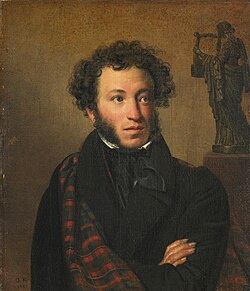 Alexander Pushkin Influenced Anna
 Mikhail Lermontov Influenced Anna
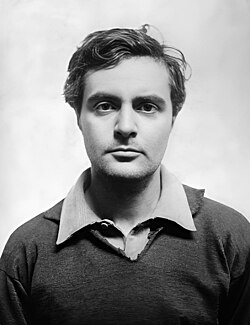 Amedeo Modigliani Influenced Anna
 Alexander Fadeyev Influenced Anna
 Innokenty Annensky Influenced Anna
 Nathan Altman Influenced Anna
 Gustav Shpet Influenced Anna
Parents

 Anna Akhmatova
Partners


Is this everyone?
Only relatives with a profile here are drawn, so a family can be larger than this. A line here can also be wrong.
Correct this familyAlso in Deutsch
Media & music


In their own words 6
, O let the organ, many-voiced, sing boldly, O let it roar like spring's first thunderstorm!
I go forth to seek - To seek and claim the lovely magic garden Where grasses softly sigh and Muses speak.
You thought I was that type: That you could forget me, And that I'd plead and weep And throw myself under the hooves of a bay mare...
Awards
About this person
Born Anna Andreyevna Gorenko in 1889, she took the pen name Akhmatova and by 1912 had begun publishing lyric poetry marked by economy and emotional restraint - a clear, strong female voice that broke new ground in Russian verse. Her first husband, Nikolai Gumilev, was executed by the Cheka; her son Lev and common-law husband Nikolay Punin spent years in the Gulag, where Punin died. Between 1935 and 1940 she composed Requiem, her tragic masterpiece about the Stalinist terror, written in secret while her work was condemned and censored. After a decade of reduced output, she resumed writing in 1936 and continued until her death, her later work haunted by time, memory, and the shadow of the regime. She was nominated for the Nobel Prize in Literature in 1965 and 1966, and died in March 1966.


