
What kind of moment: History, War
Russo-Turkish War and fall of Plevna
- When
- 24 April 1877 to 3 March 1878
- Where
- Balkans, Caucasus
- Outcome
- Russian coalition victory, see
Russia and its Balkan allies fought the Ottoman Empire from 1877 to 1878 to reclaim territory lost in the Crimean War and support Christian populations under Ottoman rule. The conflict turned on the brutal Russian siege of the fortress town of Plevna in Bulgaria, which held out for five months before falling in December 1877. The Ottoman defeat hastened the empire's decline and redrew the map of southeastern Europe, establishing independent or autonomous Balkan states.
The war marked a decisive shift in the balance of power between Europe's great empires. Russia's victory restored its position as a Balkan force and triggered Ottoman territorial losses that accelerated the empire's three-decade slide toward irrelevance.
In numbers
- Ottoman territorial losses
- Approximately 1.5 million square kilometers; Bulgaria gains autonomy, Romania and Serbia gain independence
Where it sits in their lives
 Alexander II of Russia1818 to 188159
 Abdul Hamid II1842 to 191834
 Grand Duke Michael Nikolaevich of Russia1832 to 190944
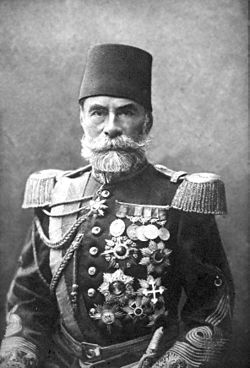
 Osman Nuri Pasha1832 to 190045
- Their age at this moment
- Their other moments in history
How it unfolded
Russia declares war on Ottoman Empire
Citing protection of Christian minorities and recovery of Crimean War losses, Russia formally enters conflict with Ottoman Empire.
Romania declares independence and joins war
Romania switches allegiance from Ottoman Empire to Russian coalition, declaring independence and declaring war on the Ottomans.
Plevna surrenders
After 143 days of siege and repeated failed assaults, Ottoman garrison surrenders. Osman Pasha evacuates remaining troops. Fall of Plevna marks turning point of entire war.
Russian forces reach Adrianople
Russian army advances to within striking distance of Constantinople, forcing Ottoman Empire to negotiate peace terms.
Treaty of San Stefano signed
Russia and Ottoman Empire sign preliminary peace treaty establishing large Bulgarian state, Romanian and Serbian independence, and other territorial transfers favoring Russian interests.
Treaty of Berlin concluded
Major European powers including Britain, Germany, France, Austria-Hungary, and Italy revise San Stefano terms. Bulgaria is partitioned; Macedonia returns to Ottoman control; Austria-Hungary gains right to occupy Bosnia-Herzegovina.
- What followed
1878: Treaty of San Stefano
- What followed
1878: Congress of Berlin
- What followed
1878: Ottoman loss of Balkans

Russo-Turkish War (1877-1878)


Лист из альб.войны 1877-78гг. 'Чудесный обед ген.Скобелева под неприятельским огнем'. 1878г ГИМ e1


Who took part


More about this war
Leaders
Alexander II of Russia (Russian Empire, Guard of Finland +4 more), Grand Duke Michael Nikolaevich of Russia, Dmitry Milyutin, Iosif Vladimirovich Gurko, Mikhail Loris-Melikov, Arshak Ter-Gukasov
Abdul Hamid II (Ottoman Empire, Albanian volunteers +3 more), Ahmed Muhtar Pasha, Osman Nuri Pasha, Suleyman Husnu Pasha, Abdülkerim Nadir Pasha, Ahmed Eyüb Paşa
Before and after, with the same people
- Emancipation of Russian Serfs
 RussiaSee the moment ›
- January Uprising in PolandRussiaSee the moment ›
- Russo-Turkish War and fall of Plevna
 Russia, Hamid II, RussiaThis moment
- Battle of Plevna
 Russia, PashaSee the moment ›