What kind of moment: History, Scientific breakthrough
Manhattan Project & Atomic Bomb
Manhattan Project was a scientific breakthrough in the United States in 1942.
- When
- 1942
The Manhattan Project didn't just end World War II - it ushered in the nuclear age. It created a permanent state of military-scientific fusion that would define the Cold War, reshape geopolitics, and leave humanity with weapons capable of ending civilization.
In numbers
- Peak employment
- Nearly 130,000 people
- Total cost
- Nearly $2 billion (1940s dollars)
Where it sits in their lives
 J. Robert Oppenheimer1904 to 196738
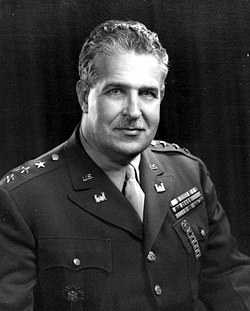 Leslie Groves1896 to 197046
- Their age at this moment
How it unfolded
Einstein's letter to Roosevelt
Feasibility confirmed
The National Academy of Sciences report concludes that a nuclear chain reaction is theoretically possible, validating the scientific basis for a weapons program.
Manhattan Engineer District established
The U.S. Army Corps of Engineers officially creates the Manhattan Engineer District, with General Leslie Groves appointed to oversee the secret weapons program.
First controlled chain reaction
Enrico Fermi achieves the first controlled nuclear chain reaction beneath Stagg Field at the University of Chicago, proving sustained nuclear fission is possible.
Los Alamos Laboratory opens
J. Robert Oppenheimer assumes leadership of the Los Alamos Laboratory in New Mexico, where bomb design and assembly will take place.
Japan surrenders
Japan announces its surrender, effectively ending World War II. The atomic bombs are credited as a major factor in the decision.
- What followed
1949: Soviet nuclear program acceleration
- What followed
1968: Nuclear Non-Proliferation Treaty
- What followed
1979: Three Mile Island incident