
What kind of moment: History, Battle
Battle of Poltava
- When
- 8 July 1709
- Where
- Poltava, Cossack Hetmanate (present-day Ukraine)
- Outcome
- Russian coalition victory
On 8 July 1709, Russian forces under Peter I crushed the Swedish army at Poltava in Ukraine, ending Sweden's two-decade dominance of Eastern Europe. The victory secured Russia's emergence as a major power and marked the beginning of Sweden's long decline from great power status.
Poltava rewrote the political map of Northern Europe. Peter's victory confirmed Russia as the region's dominant military force, shifted the balance of power decisively away from Sweden, and established the foundations for Russian imperial expansion that would define the next two centuries.
Where it sits in their lives
 Peter the Great1672 to 172537
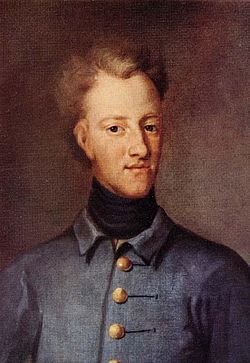 Charles XII of Sweden1682 to 171827
 Alexander Menshikov1673 to 172935
 Boris Sheremetev1652 to 171957
- Their age at this moment
How it unfolded
Great Northern War begins
Peter I declares war on Sweden, initiating a conflict that will last two decades and reshape Northern Europe.
Battle of Lesnaya
Russian forces under Peter I defeat a Swedish supply column, weakening Charles XII's position before the decisive confrontation.
Treaty of Nystad ends Great Northern War
Sweden formally cedes Baltic territories to Russia, confirming Russia's new status as a dominant regional power.
- What followed
1721: Treaty of Nystad
- What followed
1712: Founding of St. Petersburg
- What followed
1721: Swedish decline from great power status
Who took part


More about this battle
Commanders
Charles XII of Sweden (Swedish Empire, Cossack Hetmanate), Carl Gustav Rehnskiöld, Carl Gustaf Creutz, Adam Ludwig Lewenhaupt, Wolmar Anton von Schlippenbach, Carl Gustaf Roos
Peter the Great (Tsardom of Russia, Cossack Hetmanate +1 more), Boris Sheremetev, Alexander Menshikov, Jacob Bruce, Ivan Skoropadsky, Semen Paliy