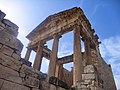
Tacfarinas
✓ Source-basedstableNumidian Roman army deserter who led Berber tribes in a war against the Romans
Tacfarinas was a Numidian Berber from Thagaste, located in the province of Proconsular Africa, who was a deserter from the Roman army who gained the support of the Gaetulian Musulamii tribe and a loose and changing coalition with his own Berber tribes in a war against the Romans in North Africa during the rule of the...
Also inDeutsch
Photos 6

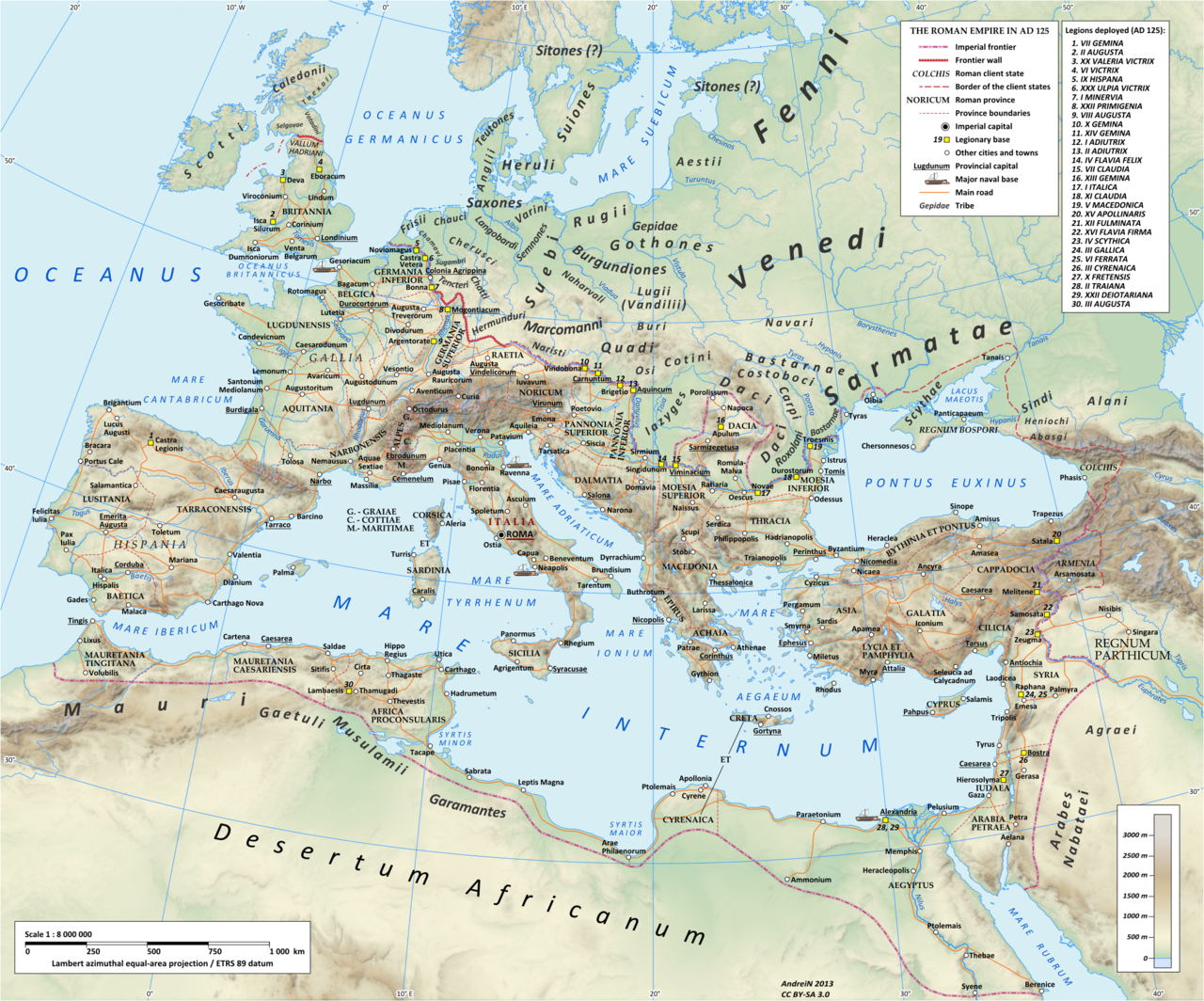 Map of the Roman Empire under Hadrian (AD ruled 117-138), showing the rough location of ancient Berber tribes on the fringes of the empire: Mauri, Musulamii, Garamantes, and Gaetuli. All four were engaged in bitter conflict with Rome during the rule of Augustus (30 BC - AD 14), and Tacfarinas was able to gain the support of substantial elements of all four tribes for his insurgency.
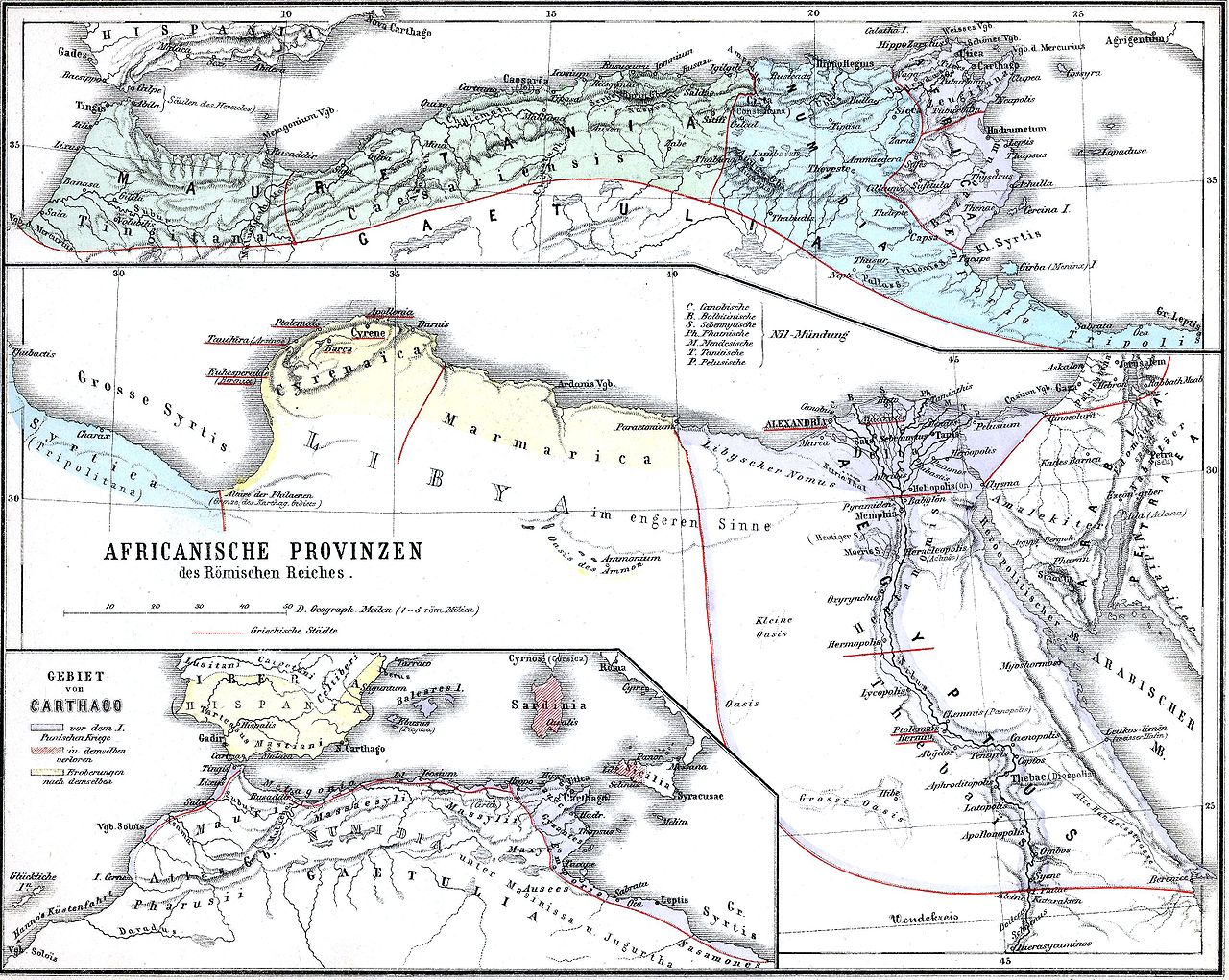 Map showing (top) the Roman province of Africa Vetus (mauve) and the Roman satellite-states of Numidia (blue) and Mauretania (green). In 25 BC, Numidia was divided into a northern part, which was annexed to Roman Africa, and a southern part, including Tripolitania (western Libya), which was added to Mauretania and placed under king Juba II, a reliable Roman client-king.
 View of the central Tunisian plateau at Téboursouk, one possible location of the ancient Thubuscum, a Roman fort besieged by Tacfarinas in AD 24. This was prime wheat-growing country and supplied most of Rome's grain. It was the conflict between the demands of Roman agriculture and the traditional grazing rights of the Berber pastoralists that were the central cause of Tacfarinas' insurgency.
 Coin of Juba II, king of Mauretania (ruled 25 BC - AD 23). Reverse: Idealised bust of Juba, with legend REXIUBA ("King Juba"). Educated in Rome, he was a personal friend of the emperor Augustus and a reliable Roman client-king.
 Bust of king Ptolemy of Mauretania, son of Juba II and last scion of the dynasty of pro-Roman Numidian kings founded by Massinissa in 201 BC. When he succeeded his elderly father as king of Mauretania in AD 23, thousands of his subjects joined the Numidian anti-Roman rebel Tacfarinas. But Ptolemy stood firm in his family's traditional support for Rome and his loyal warriors assisted the Romans in tracking down and killing Tacfarinas in AD 24. Thereafter, his popularity increased, and his arbitrary execution by the emperor Caligula in AD 40 sparked a violent anti-Roman uprising in Mauretania.
About this person
Tacfarinas was a Numidian Berber from Thagaste, located in the province of Proconsular Africa, who was a deserter from the Roman army who gained the support of the Gaetulian Musulamii tribe and a loose and changing coalition with his own Berber tribes in a war against the Romans in North Africa during the rule of the emperor Tiberius. Though Tacfarinas' personal motivation is unknown, it is likely that the Roman occupation under Augustus of the traditional grazing grounds of the Musulamii was the determining factor.
Fame.am measures public visibility signals. It does not measure human value, talent, morality, or credibility.