Oriana Fallaci
Italian journalist (1929-2006) · Italy · Journalists · Died at 77 · also Serbia
Oriana Fallaci is read about 1,670 times a day, in 62 languages.
A typical day, 30 days to 15 October 2026
The middle day of the days counted, so one week of news cannot move it. The line under it is the last 390 days, one point a day.
Something wrong?She made world leaders squirm. Oriana Fallaci's interviews in the '60s, '70s, and '80s were long, confrontational, and often brutal - Henry Kissinger called his "the single most disastrous conversation" he ever had with press.
A life in dates
Also in Deutsch
Photos 8
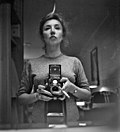
 Oriana Fallaci self portrait Rolleiflex
.jpg?width=1200) 02 - Oriana Fallaci (ph. GianAngelo Pistoia)
02 - Oriana Fallaci (ph. GianAngelo Pistoia).jpg?width=1200) 03 - Oriana Fallaci (ph. GianAngelo Pistoia)
03 - Oriana Fallaci (ph. GianAngelo Pistoia) Controfagotto 1961 - Oriana Fallaci
 Fallaci.OrzelKarskiego
.jpg?width=1200) Heinz Riedt with Oriana Fallaci (photo taken in Cologne in 1987)
Heinz Riedt with Oriana Fallaci (photo taken in Cologne in 1987) Leone Fallaci 1973
_cropped.jpg?width=1200) O. Fallaci 1 (Foto di GianAngelo Pistoia) cropped
O. Fallaci 1 (Foto di GianAngelo Pistoia) croppedIn their own words 10
 ,
, Whether it comes from a despotic sovereign or an elected president, from a murderous general or a beloved leader, I see power as an inhuman and hateful phenomenon...
If you put a pistol against my head and ask which I think is worse, Muslims or Mexicans, I'd have to think a moment, then I'd say the Muslims because they've broken my balls.
Europe is no longer Europe, it is Eurabia, a colony of Islam, where the Islamic invasion does not proceed only in a physical sense, but also in a mental and cultural sense.
Awards
Family
Parents
Oriana FallaciBrothers and sisters
Is this everyone?
Only relatives with a profile here are drawn, so a family can be larger than this. A line here can also be wrong.
Correct this familyAbout this person
Fallaci joined the Italian resistance as a teenager during World War II, then built a career covering war and revolution from the ground. In 1968, Mexican soldiers shot her three times and left her for dead; she survived and kept returning to conflict zones. Her book Interview with History collected sit-downs with figures like Indira Gandhi, Golda Meir, Yasser Arafat, the Shah of Iran, and Ruhollah Khomeini - encounters that became notorious for how far she pushed. After retiring in New York, the September 11th attacks pulled her back: she wrote articles and books sharply critical of Islam that found a wide audience and drew accusations of Islamophobia.




Fame.am measures public visibility signals. It does not measure human value, talent, morality, or credibility.