Madhvacharya
13th-century Hindu Dvaita philosopher · India · Academics · Lived 1238 to 1317 · aged 79
Madhvacharya is read about 247 times a day, in 50 languages.
A typical day, 30 days to 15 September 2026
The middle day of the days counted, so one week of news cannot move it. The line under it is the last 60 days, one point a day.
Something wrong?Madhvacharya, also known as Purna Prajna and Ānanda Tīrtha, was an Indian philosopher, theologian and the chief proponent of the Dvaita (dualism) school of Vedanta. Madhva called his philosophy Tattvavāda meaning "arguments from a realist viewpoint".
Also in Deutsch
Photos 4


About this person
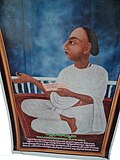
Madhvacharya, also known as Purna Prajna and Ānanda Tīrtha, was an Indian philosopher, theologian and the chief proponent of the Dvaita (dualism) school of Vedanta. Madhva called his philosophy Tattvavāda meaning "arguments from a realist viewpoint". Madhvacharya was born at Pajaka near Udupi on the west coast of Karnataka state in 13th-century India. As a teenager, he became a Sanyasi (monk) joining Brahma-sampradaya guru Achyutapreksha, of the Ekadandi order. Madhva studied the classics of Hindu philosophy, and wrote commentaries on the Principal Upanishads, the Bhagavad Gita and the Brahma Sutras (Prasthanatrayi), and is credited with thirty seven works in Sanskrit. His writing style was of extreme brevity and condensed expression. His greatest work is considered to be the Anuvyakhyana, a philosophical supplement to his bhasya on the Brahma Sutras composed with a poetic structure. In some of his works, he proclaimed himself to be an avatar of Vayu, the son of god Vishnu, however, the textual basis cited for some such claims has been questioned in modern scholarship, especially by Roque Mesquita, who argued that a number of scriptural sources adduced by Madhva in support of this and other doctrines are untraceable and were likely composed by Madhva himself under what he believed to be divine inspiration. Madhvacharya was a critic of Adi Shankara's Advaita Vedanta and Ramanuja's Vishishtadvaita Vedanta teachings. He toured India several times, visiting places such as Badrinath, Bengal, Varanasi, Dwaraka, Goa and Kanyakumari, engaging in philosophical debates and visiting Hindu centres of learning. Madhva established the Krishna Mutt at Udupi with a murti secured from Dwarka Gujarat in 1285 CE.



Fame.am measures public visibility signals. It does not measure human value, talent, morality, or credibility.