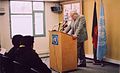
M. Cherif Bassiouni
✓ Source-basedstableEgyptian-American lawyer (1937-2017)
Mahmoud Cherif Bassiouni was an Egyptian-American emeritus professor of law at DePaul University, where he taught from 1964 to 2012. He served in numerous United Nations positions and served as the consultant to the US Department of State and Justice on many projects.
Also inDeutsch
Photos 2


Awards 7
Connected to M. 6
 Elena PoniatowskaAlso won honorary doctor of the University of Pau
 Alois MockAlso won honorary doctorate of the University of Tirana
 James BjorkenAlso won honorary doctor of the University of Turin
 Iorgu IordanAlso won Honorary doctors of Ghent University
 Antoni Maria Badia i MargaritAlso won honorary doctorate of Salzburg University
 Georgios IacovouAlso won Great Golden Medal of Honour for Services to the Republic of Austria
About this person
Mahmoud Cherif Bassiouni was an Egyptian-American emeritus professor of law at DePaul University, where he taught from 1964 to 2012. He served in numerous United Nations positions and served as the consultant to the US Department of State and Justice on many projects. He was a founding member of the International Human Rights Law Institute at DePaul University which was established in 1990. He served as president from 1990 to 1997 and then as president emeritus. Bassiouni is often referred to by the media as "the Godfather of International Criminal Law" and a "war crimes expert". As such, he served on the Steering Committee for The Crimes Against Humanity Initiative, which was launched to study the need for a comprehensive convention on the prevention and punishment of crimes against humanity, and draft a proposed treaty. He spearheaded the drafting of the proposed convention, which as of 2014 is being debated at the International Law Commission.
 United States
Fame.am measures public visibility signals. It does not measure human value, talent, morality, or credibility.