Khalil Gibran
Lebanese-American writer, poet, and painter (1883-1931) · Turkey · Writers · Died at 48
Khalil Gibran is read about 1,994 times a day, in 106 languages.
A typical day, 30 days to 15 October 2026
The middle day of the days counted, so one week of news cannot move it. The line under it is the last 390 days, one point a day.
Something wrong?The Prophet has sold more copies than almost any book written in the last century, translated into over 100 languages, and its author - a Lebanese emigrant who painted as much as he wrote - died at 48 never seeing the full reach of what he'd made.
A life in dates
Also in Deutsch
Photos 8


.jpg?width=1200)
.jpg?width=1200)


.jpg?width=1200)
.JPG?width=1200)
In their own words 10
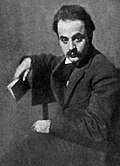 ,
, For the first time the sun kissed my own naked face and my soul was inflamed with love for the sun, and I wanted my masks no more.
My friend, I am not what I seem. Seeming is but a garment I wear - a care-woven garment that protects me from thy questionings and thee from my negligence.
I know faces, because I look through the fabric my own eye weaves, and behold the reality beneath.
About this person
Gibran left the mountains of Ottoman Lebanon for Boston in 1895, where a teacher spotted his talent and connected him to publisher F. Holland Day. Sent back at fifteen to study in Beirut, he returned to the U.S. in 1902 after his sister's death, then lost his mother and half-brother the next year. He showed drawings in 1904, published his first Arabic book in 1905, and with backing from benefactress Mary Haskell studied art in Paris from 1908 to 1910, mixing with Syrian rebels whose anti-Ottoman ideas he echoed in writings later banned. Settling in New York in 1911, he published The Madman in English in 1918 and The Prophet in 1923, co-founded the Pen League in 1920, and exhibited paintings that critics saw as classicist and mythological. He died in 1931 of cirrhosis and tuberculosis, already a literary figure on both sides of the Atlantic, and left his royalties to his birth village, where a museum now stands.



Fame.am measures public visibility signals. It does not measure human value, talent, morality, or credibility.