Hans von Bülow is read about 262 times a day, in 35 languages.
Counted to 16 September 2026, not since.
The middle day of the days counted, so one week of news cannot move it. The line under it is the last 60 days, one point a day.
Something wrong?Freiherr Hans Guido von Bülow was a German conductor, pianist, and composer of the Romantic era. As one of the most distinguished conductors of the 19th century, his activity was critical for establishing the successes of several major composers of the time, especially Richard Wagner and Johannes Brahms.
Also in Deutsch
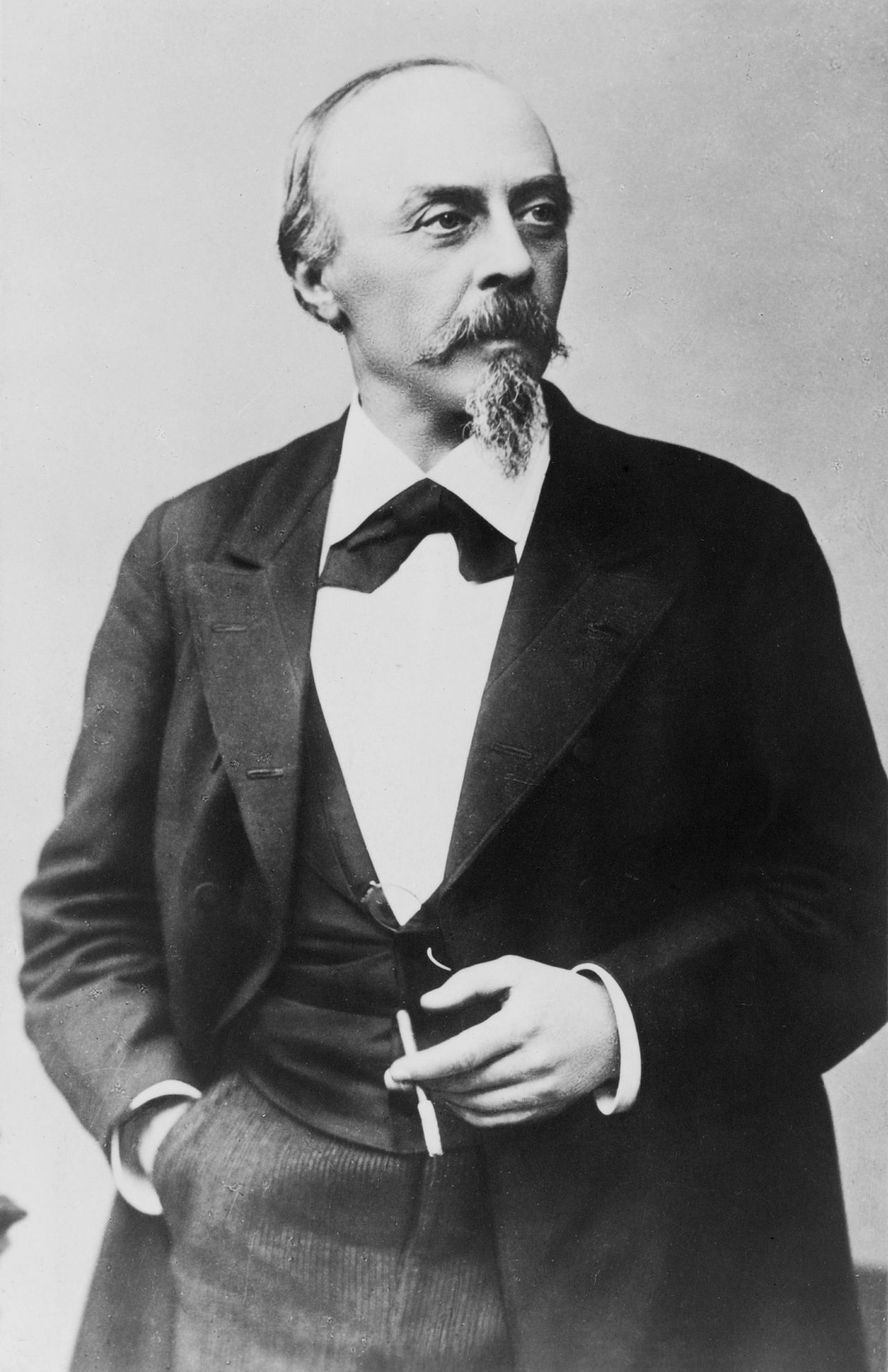
Photos 3


Awards
Family
Parents
 Hans von Bülow
Partners

Children

Is this everyone?
Only relatives with a profile here are drawn, so a family can be larger than this. A line here can also be wrong.
Correct this familyAbout this person
Freiherr Hans Guido von Bülow was a German conductor, pianist, and composer of the Romantic era. As one of the most distinguished conductors of the 19th century, his activity was critical for establishing the successes of several major composers of the time, especially Richard Wagner and Johannes Brahms. Alongside Carl Tausig, Bülow was perhaps the most prominent of the early students of the Hungarian composer, pianist and conductor Franz Liszt; he gave the first public performance of Liszt's Sonata in B minor in 1857. He became acquainted with, fell in love with and eventually married Liszt's daughter Cosima, who later left him for Wagner. Noted for his interpretation of the works of Ludwig van Beethoven, he was one of the earliest European musicians to tour the United States.
In common with Hans
 Olivier MessiaenBoth received Royal Philharmonic Society Gold Medal
 Pablo CasalsBoth received Royal Philharmonic Society Gold Medal
 Henry WoodBoth received Royal Philharmonic Society Gold Medal
 Janet BakerBoth received Royal Philharmonic Society Gold Medal
 Ignacy Jan PaderewskiBoth received Royal Philharmonic Society Gold Medal
 Claudio AbbadoBoth received Royal Philharmonic Society Gold Medal
Fame.am measures public visibility signals. It does not measure human value, talent, morality, or credibility.