Grauballe Man
Iron Age bog body found in Denmark · Lived 250 BC to 300 BC · aged -50
Grauballe Man is read about 199 times a day, in 19 languages.
A typical day, 30 days to September 18, 2026
The middle day of the days counted, so one week of news cannot move it. The line under it is the last 60 days, one point a day.
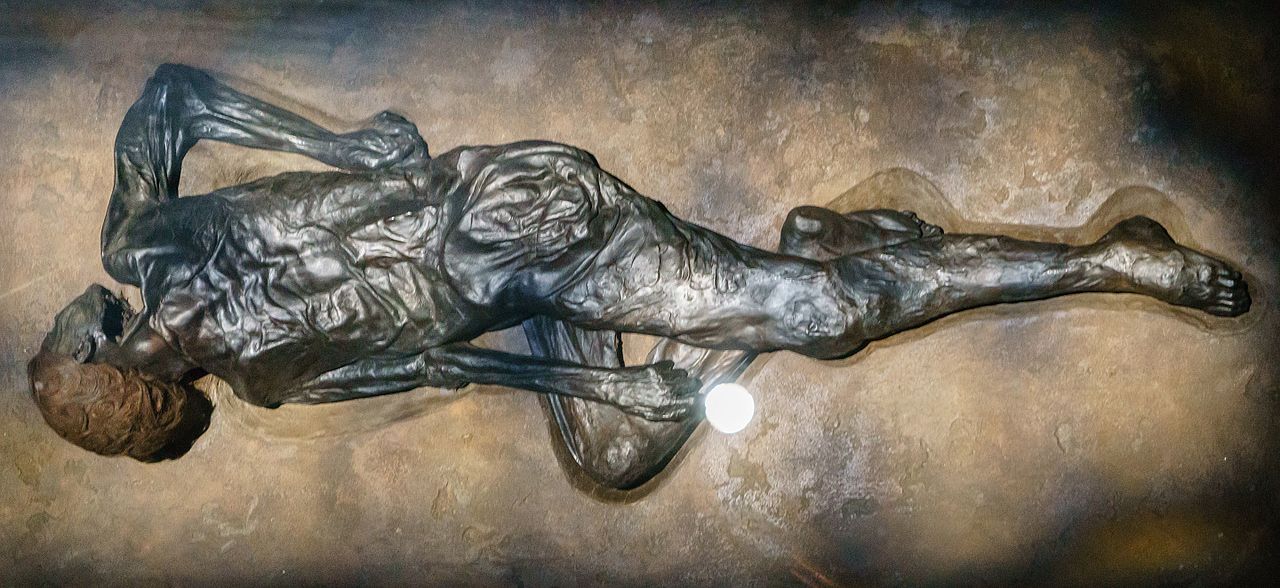
Something wrong?The Grauballe Man is a bog body that was uncovered in 1952 from a peat bog near the village of Grauballe in Jutland, Denmark. The body is that of a man dating from the late 3rd century BC, during the early Germanic Iron Age. Based on the evidence of his wounds, he was most likely killed by having his throat slit.
Also in Deutsch
Photos 4


About this person
The Grauballe Man is a bog body that was uncovered in 1952 from a peat bog near the village of Grauballe in Jutland, Denmark. The body is that of a man dating from the late 3rd century BC, during the early Germanic Iron Age. Based on the evidence of his wounds, he was most likely killed by having his throat slit. His corpse was then deposited in the bog, where it was naturally preserved for more than two millennia. His was not the only bog body to be found in the peat bogs of Jutland. Together with other notable examples, Tollund Man and the Elling Woman, Grauballe Man represents an established tradition at the time. It is commonly thought that these killings, including that of Grauballe Man, were examples of human sacrifice, possibly an important rite in Iron Age Germanic paganism.
Fame.am measures public visibility signals. It does not measure human value, talent, morality, or credibility.