Edvard Munch is read about 2,537 times a day, in 105 languages.
A typical day, 30 days to 15 October 2026
The middle day of the days counted, so one week of news cannot move it. The line under it is the last 390 days, one point a day.
Something wrong?The face in The Scream - agonized, hands-to-skull, mouth open against a blood-orange sky - is the single most recognized image of modern anxiety. Munch painted what he heard walking at sunset in Kristiania: "the enormous, infinite scream of nature."
A life in dates
Also in Deutsch
Photos 8
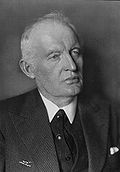
 Edvard Munch 1933-2
 -2022-03-01 The Dance of Life by Edvard Munch, North Lodge Park, Cromer, Norfolk
 20240809 133318 Oslo, Norway 03
_Der_Schrei.jpg?width=1200) AaIMG 6797 (2) Der Schrei
AaIMG 6797 (2) Der Schrei Book looks down from window, close up
 Boy looks down from window
.jpg?width=1200) Cezanne und Hodler 1920 (128722158)
Cezanne und Hodler 1920 (128722158).jpg?width=1200) Die Kunst des 19. und 20. Jahrhunderts. 1 1917 (143730476)
Die Kunst des 19. und 20. Jahrhunderts. 1 1917 (143730476)In their own words 10
 ,
, By painting colours and lines and forms seen in a quickened mood I was seeking to make this mood vibrate as a phonograph does.
Realism's 'truth' as embodied in painting and literature now solely consists of things capable of being seen by the eye or heard by the ear.
Nothing ceases to exist - there is no example of this in nature.. .There is an entire mass of things that cannot rationally explained.
Awards
Family
Parents
 Edvard Munch
Brothers and sisters


Is this everyone?
Only relatives with a profile here are drawn, so a family can be larger than this. A line here can also be wrong.
Correct this familyAbout this person
Munch grew up under the twin shadows of illness and the fear he'd inherit the mental condition that ran in his family. At the Royal School of Art and Design in Kristiania, he fell in with nihilist Hans Jæger, who pushed him toward "soul painting" - rendering his own emotional and psychological state. Travel sharpened the tool: in Paris he absorbed Gauguin, van Gogh, and Toulouse-Lautrec's command of color; in Berlin he painted Strindberg and began The Frieze of Life, a cycle on love, anxiety, jealousy, betrayal. Between 1893 and 1910 he made four versions of The Scream in paint and pastel, plus prints; one pastel would become the fourth most expensive painting ever sold at auction. Fame and wealth didn't settle him - he couldn't commit to marriage, and a breakdown in 1908 forced him off alcohol. His final decades were quiet, working in privacy, and though the Nazis banned his art, most of it survived the war.



Fame.am measures public visibility signals. It does not measure human value, talent, morality, or credibility.