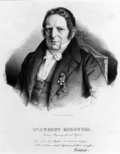
Arthur Schopenhauer
German philosopher (1788-1860) · Academics · Died at 72
Arthur Schopenhauer is read about 5,381 times a day, in 112 languages.
A typical day, 30 days to 23 October 2026
The middle day of the days counted, so one week of news cannot move it. The line under it is the last 398 days, one point a day.
Something wrong?He argued that reality is the thrashing of a blind, irrational will - and that recognizing this truth leads straight to pessimism.
Also in Deutsch
Photos 8


In their own words 10
 ,
, The philosophy of Kant, then, is the only philosophy with which a thorough acquaintance is directly presupposed in what we have to say here.
It is the courage to make a clean breast of it in the face of every question that distinguishes the philosopher.
The New Testament … must be in some way traceable to an Indian source: its ethical system, its ascetic view of morality, its pessimism, and its Avatar, are all thoroughly Indian.
Family
Parents

 Arthur Schopenhauer
Is this everyone?
Only relatives with a profile here are drawn, so a family can be larger than this. A line here can also be wrong.
Correct this familyAbout this person
Building on Kant's transcendental idealism, he proposed an atheistic metaphysics: the phenomenal world is the manifestation of a blind, irrational noumenal will. He rejected the German idealism dominant around him and became one of the first Western philosophers to affirm tenets of Indian philosophy - asceticism, denial of the self, the world-as-appearance. His work exemplified philosophical pessimism. It drew little attention while he lived, but after his death on 21 September 1860 it spread across philosophy, literature, and science, influencing thinkers and artists through its writing on aesthetics, morality, and psychology.



Fame.am measures public visibility signals. It does not measure human value, talent, morality, or credibility.