Andrew Huxley
English physiologist and biophysicist (1917-2012) · United Kingdom · Scientists · Died at 94
Andrew Huxley is read about 113 times a day, in 63 languages.
A typical day, 30 days to 16 September 2026
The middle day of the days counted, so one week of news cannot move it. The line under it is the last 60 days, one point a day.
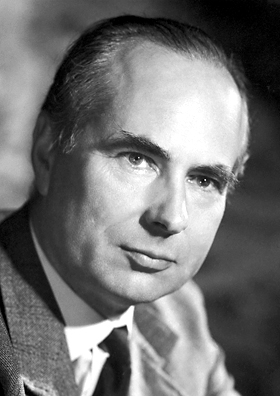
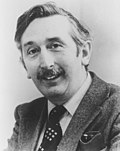
Something wrong?Sir Andrew Fielding Huxley was an English physiologist and biophysicist. He was born into the prominent Huxley family. After leaving Westminster School in central London, he went to Trinity College, Cambridge, on a scholarship, after which he joined Alan Hodgkin to study nerve impulses.
A life in dates
Also in Deutsch
Photos 1
Awards
Family
Parents

 Andrew Huxley
Partners
Children
Brothers and sisters


Is this everyone?
Only relatives with a profile here are drawn, so a family can be larger than this. A line here can also be wrong.
Correct this familyAbout this person
Sir Andrew Fielding Huxley was an English physiologist and biophysicist. He was born into the prominent Huxley family. After leaving Westminster School in central London, he went to Trinity College, Cambridge, on a scholarship, after which he joined Alan Hodgkin to study nerve impulses. Their eventual discovery of the basis for propagation of nerve impulses earned them the Nobel Prize in Physiology or Medicine in 1963. They made their discovery from the giant axon of the Atlantic squid. Soon after the outbreak of the Second World War, Huxley was recruited by the British Anti-Aircraft Command and later transferred to the Admiralty. After the war he resumed research at the University of Cambridge, where he developed interference microscopy that would be suitable for studying muscle fibres.
In common with Andrew
Scientists from the United Kingdom 4



Fame.am measures public visibility signals. It does not measure human value, talent, morality, or credibility.